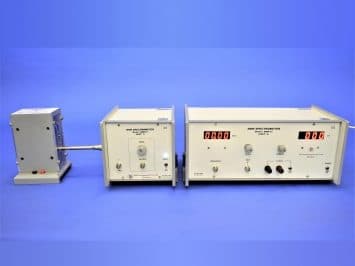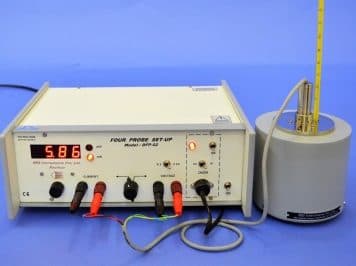
Resistivity of Semiconductors by Four Probe Method at Different (DFP-03)
Resistivity of Semiconductor by Four Probe Method at different temperatures.
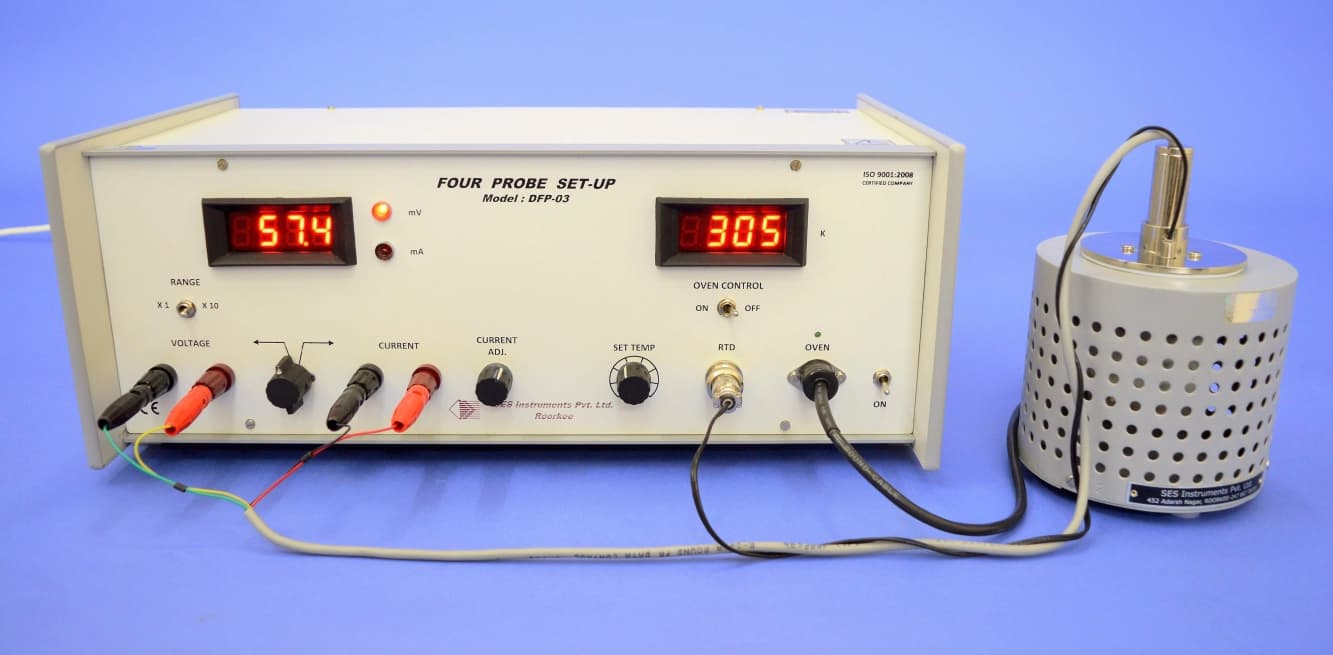
collinear. The error due to contact resistance, which is significant in the electrical measurement on semiconductors, is avoided by the use of two extra contacts (probes) between the current contacts. In this arrangement the contact resistance may all be high compare to the sample resistance, but as long as the resistance of the sample and contact resistance's are small compared with the effective resistance of the voltage measuring device (potentiometer, electrometer or electronic voltmeter), the measured value will remain unaffected. Because of pressure contacts, the arrangement is also
Technical data
- Model
- sku-36
- Manufacturer
- SVS Labs
- Temperature Range
- Ambient to 473K Accuracy : ±0.25% of the reading ±1 digit
- Resolution
- 1K Current range : 0-20 mA
- Stability
- ±0.5K Load regulation : 0.05% for 0 to full load
- Measurement Accuracy
- ±1K (typical) Resolution : 10 µA
- Oven
- Specially designed for Line regulation : 0.05% for 10% changes
- Sensor
- RTD (A class)
- Display
- 3½ digit, 7 segment LED
- Power
- 150W
- Overload Indicator
- Sign of 1 on the left &
- Used in physics and electronics laboratories for resistivity of semiconductors by four probe method at different-related experiments.
- Suitable for undergraduate teaching, postgraduate coursework, and research projects.
- Compact bench-top design fits standard laboratory benches and demonstration setups.
- Resistivity of Semiconductor by Four Probe Method at different temperatures
Lock in a quote for Resistivity of Semiconductors by Four Probe Method at Different (DFP-03).
Fill the form — we’ll respond with a proforma invoice, INCOTERMS variations and lead-time within one business day.